Why Workflow Design Fails & How to Fix It

At Momentum Healthcare & Technology Consulting, we often see care-at-home organizations invest heavily in redesigning workflows and implementing new tools only to watch those efforts slowly unravel. The issue is rarely the strategy itself; it’s what happens after implementation.
In fact, at a recent conference, our Founder and CEO Kristen Duell focused on a critical gap in care-at-home operations: the failure to reinforce change consistently enough for it to stick.
Core Problem: The Reinforcement Gap
Reaching the system design stage and developing a strategy that truly aligns with your organization takes significant effort. Many organizations never even get this far, but those that do often feel confident in their direction. They roll out new workflows, communicate expectations, and train their teams.
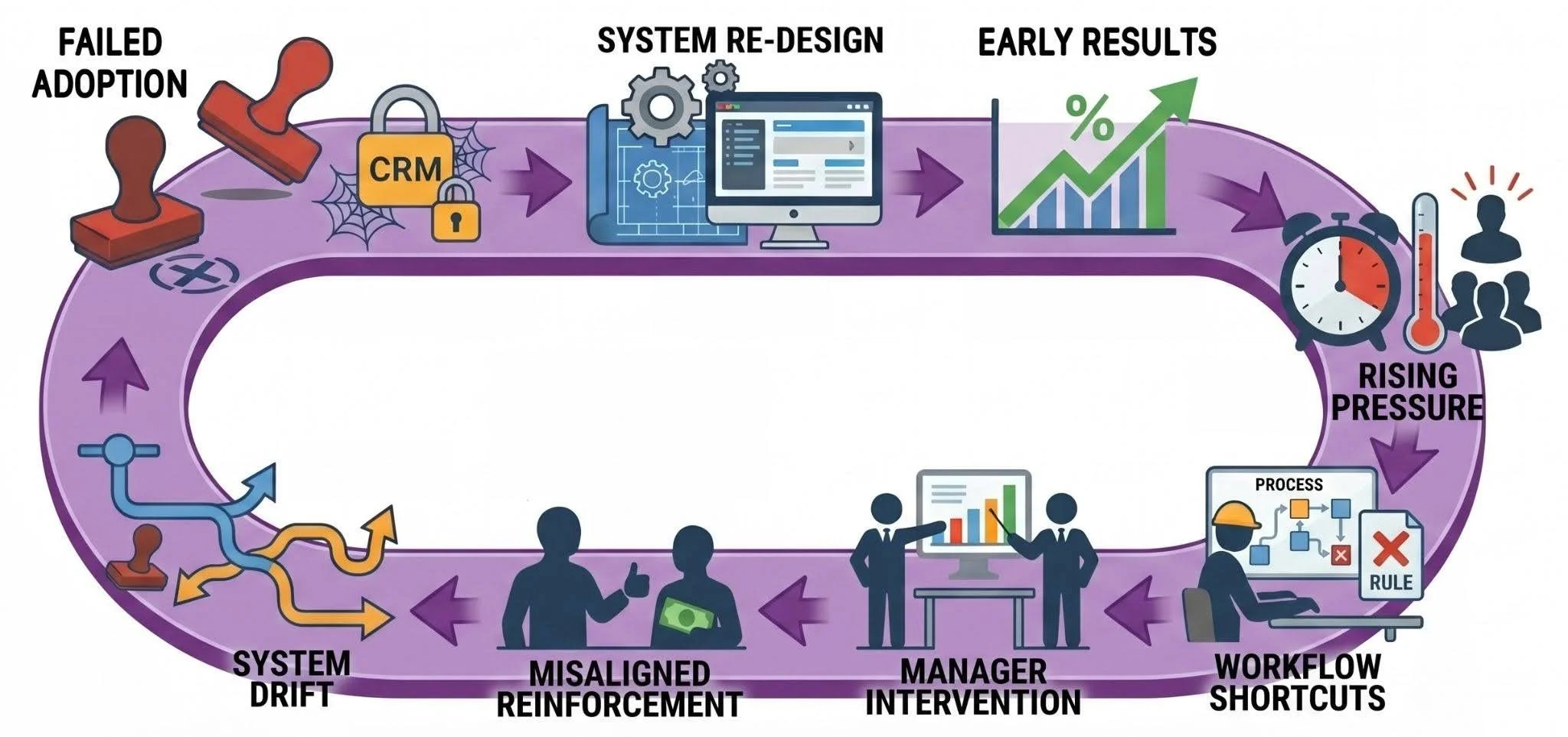
And then, something unexpected happens, the design starts to break down. Leaders are left questioning what went wrong, often attributing the issue to a lack of follow-through from their teams. It’s an easy conclusion to draw, but it misses the real problem.
In most cases, the issue is not the staff. It’s the lack of consistent reinforcement after implementation.
This pattern is well documented. Research from McKinsey shows that most transformation efforts fail not because of poor strategy, but because organizations struggle to sustain change.
Teams can try to adopt new ways of working, but if the environment around them does not support and reinforce those changes, behavior will drift. Under pressure, people default to what is familiar and efficient in the moment.
Reinforcement has to be built into daily operations. The right way of working should also be the easiest way. Without that alignment, even strong teams will fall back into old habits and deprioritize new processes.
What leaders communicate matters, but what they consistently reinforce matters more. Over time, every organization reflects the behaviors it rewards, tolerates, and prioritizes, not the ones written in policy.
Why Even Strong Systems Break Down
In high-pressure environments like home health, hospice, and home care, staff default to what feels easiest and most familiar. Without reinforcement, even well-designed systems lose traction.
Common patterns include:
Allowing repeated exceptions within standardized workflows
Rewarding speed and output over consistency
Managers stepping in to fix problems instead of enforcing process
Competing priorities that dilute focus
These behaviors are not random, but reinforced over time through daily decisions.
5 Leadership Breakdowns That Prevent Adoption
Leaders can identify where adoption is failing by focusing on 5 key areas.
1. Workflow Drift
Where does your team consistently deviate from the intended process?
Drift signals a gap between design and reality. If teams are working around the system, the issue is not just compliance, it’s misalignment between expectations and execution.
2. Misaligned Priorities
Are new expectations layered on top of existing responsibilities?
When everything feels urgent, teams revert to familiar workflows. Reinforcement requires removing competing priorities so the new way of working can take hold.
3. Repeat Problems
What issues keep getting solved over and over?
Without closed-loop feedback, teams fix problems in the moment but never address root causes. This approach creates a cycle of temporary solutions without long-term improvement.
4. Manager Overload
Where are managers compensating instead of enforcing?
When managers absorb breakdowns, the system never improves. Over time, teams learn that processes are flexible and problems will be handled for them.
5. Rewards vs. Expectations
What behaviors are actually recognized and rewarded?
If leaders say they value consistency but celebrate firefighting, teams will prioritize urgency over process. Behavior follows reinforcement, not intention.
Turning Strategy Into Daily Practice
Closing the gap between design and execution requires intentional leadership action.
In practice, that means:
Reinforcing one standard of execution across teams
Reducing competing priorities to create focus
Addressing root causes, not just symptoms
Redefining manager success around consistency
Aligning recognition with desired behaviors
These shifts require significant discipline. Leaders must consistently reinforce the same expectations, especially when pressure increases. Research, including a 2019 study, shows that under stress, the brain shifts away from goal-directed thinking and toward habitual behavior, making consistency even more critical.

Start With One Leadership Shift
Trying to fix everything at once often leads to more complexity. Instead, start with one question: Where is reinforcement breaking down most in your organization today? Choose one area, make one leadership adjustment, and apply it consistently. Over time, small, deliberate changes in reinforcement create stability across the entire system.
As your care-at-home organization evolves, the ability to sustain change will become a defining factor in your performance. Strong design sets the direction, and consistent reinforcement determines whether it lasts.
At Momentum Healthcare & Technology Consulting, we work with leaders to bridge that gap. We specialize in turning strategy into daily execution that holds under pressure.
If you’re evaluating why recent changes haven’t fully taken hold, or where adoption may be breaking down, we’re here to help you work through it.